


Frequently Asked Questions
How many mares does ColdSpring Mares Inc have?
Currently, we have about 60 mares in our program.
Are you accepting more mares into the program?
Please reach out to us if you think you have a mare that may work for the program. Candidates should have had at least one foal in their life and have been good moms. We only accept mares that are well mannered and easy to handle, with a kind and gentle nature. As far as breeds go, we have a little bit of everything and are open to all! Please visit our Donate a Mare page for more info.
How long are mares in the program?
Our mares can remain in the program for many years, it really just all depends on the individual. Some mares come to us earlier in life and may have 10+ good quality years left to their life before they’re ready to officially retire! We treat each horse as an individual and assess what would be best for them the upcoming season. If at any point being a nurse mare becomes too much, they are permanently retired.
What happened to our mare’s foal?
None of our mares are ever in foal or impregnated to induce and maintain lactation.
Do the mares travel to the foals?
Typically, our mares will travel to their orphans and remain with them until the age of six months. At that point in time, they are weaned and the mares come back to our home farm for a vacation period. On the rare occasion, it may make more sense for the foal to travel to and stay at our farm - that is something we do on a case by case basis.
How do the mares make milk if they aren’t bred and why is the protocol proprietary?
This is a great question and one we get frequently! We’ve found it easiest to answer both of these questions together. Bronwyn developed a proprietary protocol over several years to bring the mares into milk and keep them there until weaning. There is no “one size fits all” answer for this as it really is dependent on the mare and what their bodies respond to. Mares are monitored and checked several times a day for certain things which then dictate what we do next for them. There is a combination of medications used, in addition to milking and diet changes necessary to make this process run smoothly prior to even completing the pairing. It is an extremely nuanced process that requires a higher level of understanding as to what is happening with each individual’s body to then decide what the next steps are for that mare. Successful pairings require horsemanship skills, experience, and knowing the mares as individuals. This is something that only comes with time, experience and learning each of these mares’ bodies and what they respond to. Keeping the process proprietary helps protect mares from being induced into milk “at home” without the proper care they need to remain healthy and pair successfully. Like anything with horses, there are a hundred ways for things to go wrong, and we’ve honed in a process that works keeping mares, foals, and the handlers safe.
Do you offer consulting?
Yes, however we have requirements for consulting services. Our consulting is tailored to organizations or veterinary clinics who are looking to start or improve their nurse mare programs.
We do not offer any consulting for individuals who are trying to induce lactation on their own mares for pairing, or offer pairing services for outside mares. This is both due to liability reasons, but also because we do not know these mares and therefore would not be able to provide the best services. Please consult your veterinarian directly for questions regarding pairings with your own horses.
If you believe you meet our requirements for consulting services and are interested in setting up an introductory call to review eligibility, please email us info@coldspringmares.com.
What happens after 6 months?
Hi Barbara!
Our mares are leased for approximately 6 months to provide nurturing care for each foal in need. During that time, the foals are gradually prepared for weaning. Our nurse nurse mares play an important role in the foals’ developmental and behavioral growth, and each pairing is closely monitored to ensure it’s the right fit.
Because every foal is different, timelines can vary depending on individual needs. Once the foal is safely weaned, our nurse mares return home to our farm for a well-deserved break before helping more foals in need!
Does this negatively impact the mares?
The mares in the program are constantly monitored for any changes or possible reactions to medications several times a day. On the very rare occasion a mare shows any sort of reaction to anything, that is ceased immediately and a different course of action is taken for that mare. The health and happiness of the mare is first above all so they are carefully monitored with detailed records of each noted! It is also extremely important to note, any hormones that our mares are given are FDA approved, studied and regulated. They are all things that are normal for a broodmare to receive within its career and our mares are typically on these medications for a much shorter period of time than your average broodmare.
Sometimes the mares appear wet in the pairing videos, why is that?
The mares are given one dose of a medication right before the pairing process that helps mimic some of the processes a mare would naturally go through when foaling. This does cause the mares to sweat for approximately 10-15 minutes before subsiding but triggers the mares body to then produce the natural hormones that they would after they give birth to a foal. This aids in the bonding process and once the foal is paired the mares body will then take it from there.
Are the nurse mares as good as the real thing?
Absolutely! Our clients will be the first to sing the praises of these wonderful ladies. Not only are they able to fully meet and fulfil a foal’s nutritional needs they offer a social/mental aspect that is imperative for foals. Some people will question, why not bucket or bottle feed instead? This is a great question and one people really need to think about before making a decision to do so. Bucket and bottle fed foals lose the very important social aspect of being a horse. They often become 1000+ pound plus “dogs” that have no concept of personal space or boundaries making them frequently dangerous to handle or break to ride. There are things only a mom is going to teach a foal and our girls 100% know that job. Additionally, foals can become quite bored without other equine companionship causing not only physical ailments but mental. They will often develop vices such as cribbing or wood chewing and gastric ulcers as well.
Do you choose which mare goes to each foal or is it at random?
Foals come in a variety of shapes and sizes, as do our mares. We try to keep a wide variety of mares ready at any given time and will then choose which mare to use based on the individual call. Each mare is an individual with their own set of strengths. Some of our mares are greater producers than others and can support a very large foal, others are more average and suit the smaller breeds such as ponies or quarter horses better. Sometimes, we will get calls for foals that may be a little “different” than others and have neurologic deficits, medical issues or even be of a different breed (we’ve done a few donkeys!) and in those cases we really consider which mare we have that’s the best fit for that. If a baby is hospitalized, they need a mare that’s happy with that living style until stabilized. Its all a very thorough and thought out process that ultimately leads to our very high success rate.
Do the mares ever reject the foals?
We have paired 300+ mares and foals over the years and have had a total of 3 say no. In these cases, they were all quite out of our control and the mares went on to adopt other orphans days later. Our ladies are extremely tolerant and well mannered and we always try to discuss the foal with the owner well before we travel to them. Unfortunately, sometimes we get surprises. The foals do need to be able to be handled safely in order to do the pairings. This means, within a reasonable degree they have to be able to be managed by a human during the pairing process for the safety of everyone and success of the pairing. Babies will be babies, but if the foal is completely feral or aggressive and unable to be handled it can present a challenge to complete the delicate pairing process as necessary for success.
What happens to the mares when they retire?
With experience comes age and many of our mares are in their teens or twenties. We often get asked, at what age do your horses “retire”. For that, we have no set in stone answer aside from - when they tell us they’re ready. Ethical treatment of our mares is our #1 priority and we take a number of things into consideration. We aim to send out happy, healthy mares. If we notice one of our girls struggling in any way, they are retired. Many times, the girls have made such an impact on one of their orphan’s families we often get asked if they can retire them permanently when the time comes. Often, they are retired to our home farm for their remaining years. In some instances, their previous owners enjoy retiring them at their farms. It is unique to each mare, but rest assured we are constantly evaluating each individual with their best interests in mind and when the time does come they always have a secured safe retirement.
Why do you charge a lease fee if you’re a nonprofit?
Our lease fees cover 25-40% of a mare's entire cost per year. This does not cover anything for her in retirement. We rely on donor funds for the remaining amounts, keeping nursemares accessible, and offering our mares the highest quality of life.
Why does it cost so much to maintain each mare in your program?
We have overhead that most horse owners wouldn’t have. This includes larger insurance to cover volunteers, our board, and staff, larger feed bills than average (our mares need a huge caloric intake to remain in shape during nursing), protocol meds, our farm lease, and other nonprofit operation related costs (like website subscriptions), and huge travel expenses (we’re driving every single day in the spring across the entire south-east hauling mares). We also house retired mares which means they have additional needs like higher vet bills, special supplements, and additional staff hours for care. These are only some of our expenses, but we’re happy to answer any questions regarding the budget, just send us a message or give us a call.
What happened to the foal’s mom?
Each of our foals has a unique story, but most of them are orphans. This generally means the foal’s dam has died during birthing, or shortly thereafter. Other scenarios where a nurse mare may be brought in include a mare rejecting a foal, a dangerous or aggressive recipient mare, a mare colicing or needing surgery, injury to the mare’s udders, twins, or a mare who is not producing enough milk for the foal after a certain period of time. Other scenarios may apply, but a nurse mare is an investment in not only the physical wellbeing of the foal, but also the psychological wellbeing of the foal. A calm, confident, and friendly mare will help develop a calm confident, and friendly foal.
What People Are Saying
Yes! I highly recommend Coldspring Mares! After tragically losing our World Champion AQHA mare we were at a loss. Thankfully, our attending vet and breeding manager recommended Coldspring Mares. Bronwyn Watts was amazing from my first tearful contact. Nurse mare Brandy (we call her Saint Brandy) arrived several days later. Bronwyn provided prompt, calming and encouraging solutions. Brandy bonded immediately making the transition as seamless as possible (all things considered). She was an excellent mother - appropriately protective yet sensible. An easy mare to have around. She raised a gorgeous colt for us and will always be remembered fondly.
— Gail HollowayAmazing, I cannot thank them enough! They walk you through the whole thing and are always there for support and to help with anything! Beyond thankful!
— Amy BraggI can’t sufficiently express our gratitude to you and Skye. Einstein did his best to put on a brave face when he lost his Mom. He immediately began drinking milk from a bucket as if he knew he would not survive unless he did. He was just so very sad not to have his Mom. We knew he could never fulfill his potential without a new Mom. Though we cared for and love him, there is so much we could never have taught him. Being with Skye has given him comfort, proper nourishment, exercise and the second chance to be a normal horse. I’ve been around a few nurse mares over the last 35 years and not one could compare to Skye. Blessed are the broodmares and surrogate Moms! Thank you for everything!!!! All of us at Rebah Farm are in your debt.
— Carol Ahearn
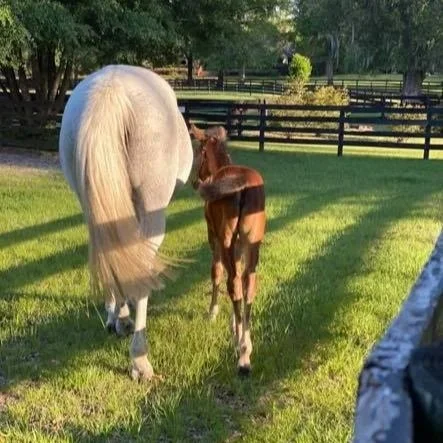
Cold Spring Nurse Mares is all heart! Bronwyn Watts is the genius behind the idea that no one gets left behind...
Her compassionate company matches gentle, loving nurse mares to foals who have not only lost their moms they often have lost their way! To witness the mares step in and bond with these babies is a miracle! This is Divine the sweetest mare and she has become the nurse mare
to this beautiful foal!
- Ann Hoffman
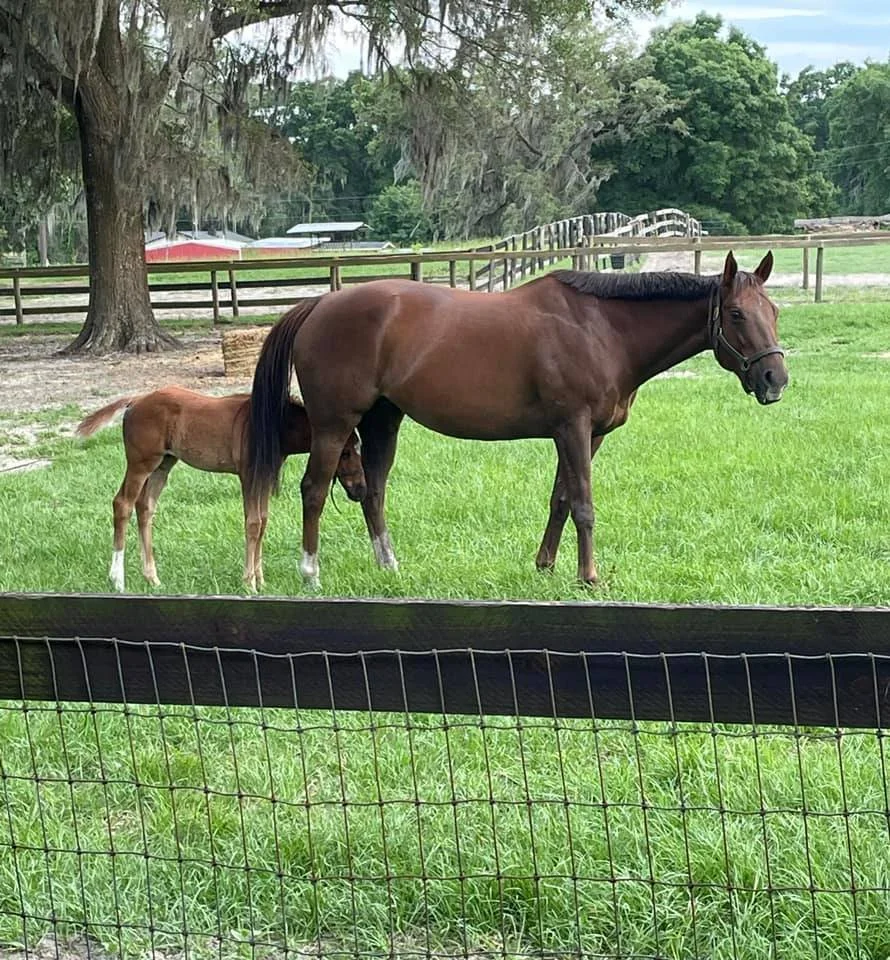
Wonderful, professional people who turn tough situations into success stories! Their compassion, knowledge and horsemanship makes the one of a kind process easy. Thank you!
- Dominique Damico